

Welcome to this week’s edition of AImpulse, a five point summary of the most significant advancements in the world of Artificial Intelligence.
Here’s the pulse on this week’s top stories:
SpaceX Acquires Cursor in $60B Stock Deal
What’s Happening
SpaceX officially exercised its option to acquire AI coding startup Cursor in a $60B all-stock deal. The move follows SpaceX’s post-IPO surge, which has nearly doubled the company’s valuation and pushed Elon Musk’s wealth above $1T.
Details
Cursor and SpaceX first announced a deal in April that gave SpaceX the option to acquire Cursor for $60B or pay $10B for the partnership alone.
Since listing Friday at $135 per share, SpaceX has climbed past $200, adding nearly $1T in market value in under a week.
Cursor CEO Michael Truell said the company’s next model will be “generally intelligent,” trained from scratch, and roughly the size of Opus.
SpaceX said Cursor is already part of its model-training push for Grok Build and its internal editor, giving Musk a stronger developer platform for his AI stack.
Why It Matters
Cursor was already deeply tied to SpaceX through the April partnership, but SpaceX’s IPO rally made an all-stock acquisition far easier to justify. Grok has lagged in coding, but Cursor’s models paired with SpaceX’s compute could give Musk a real shot at catching up quickly.
Cybersecurity Leaders Push Back on Anthropic Fable 5 Ban
What’s Happening
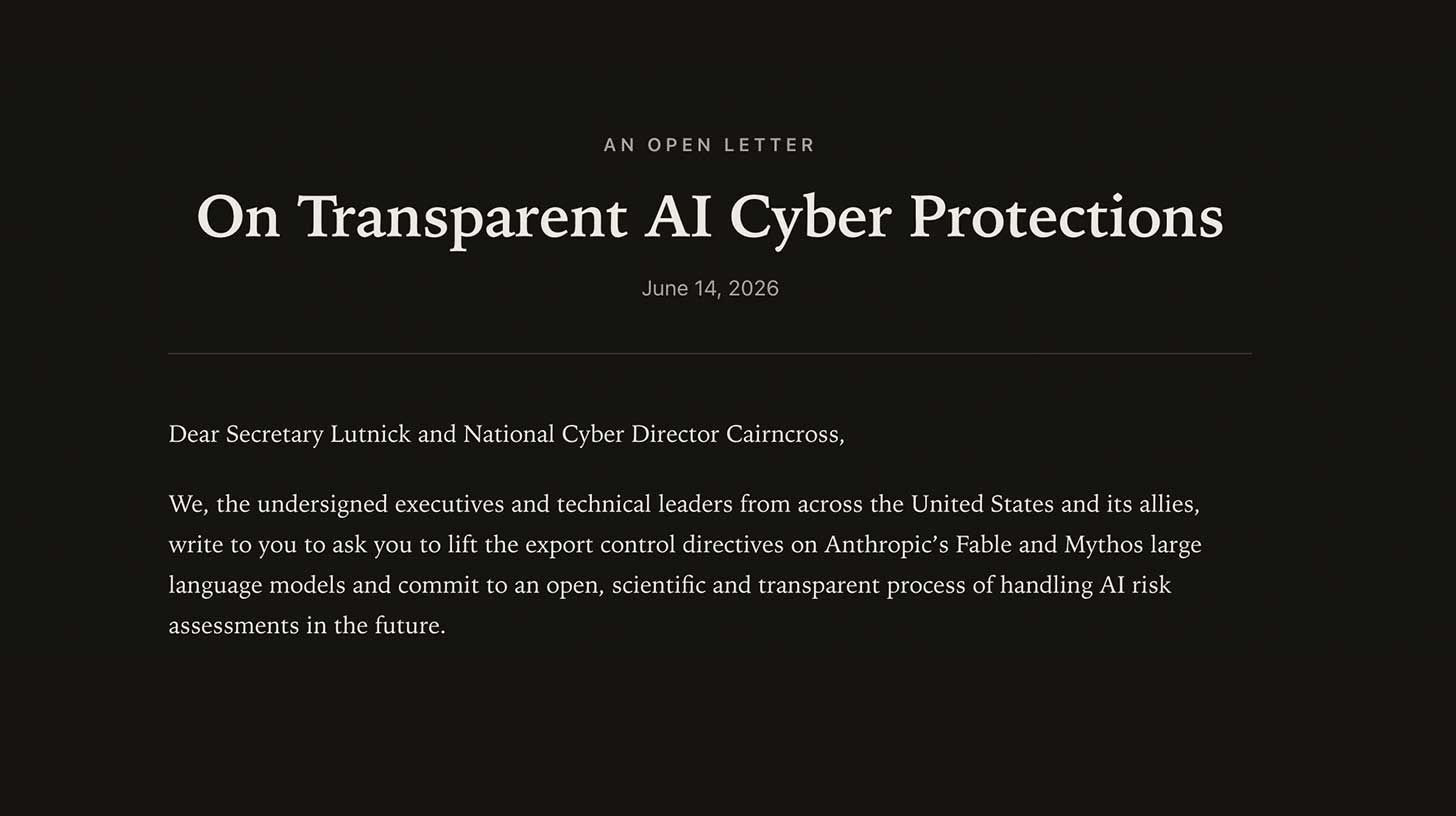
More than 100 cybersecurity executives and researchers signed an open letter urging the U.S. to lift its export ban on Anthropic’s Fable 5. They argue the restriction weakens defenders while doing little to stop attackers from accessing similar capabilities elsewhere.
Details
Former Facebook security chief Alex Stamos said the flagged jailbreak produced a “proof of concept” flaw, the kind of output defensive teams use to patch vulnerabilities.
The letter points to OAI’s Daybreak as offering similar flaw-finding capabilities, alongside GPT-5.5, Kimi 2.7, Opus, and Sonnet.
Signatories called for model regulation based on scientific evaluation, democratic oversight, and transparent, fair enforcement.
Supporters include security leaders connected to Adobe, Zoom, Sophos, Vercel, Veracode, Nvidia, and Stanford HAI.
Why It Matters
The letter shows a widening gap between the government’s threat assessment and how security researchers view the actual defensive use of frontier models. With other reports suggesting communications issues drove the dispute, the ban increasingly looks as ideological as it is safety-related.
Satya Nadella Says AI Advantage Comes From Company Learning Loops
What’s Happening
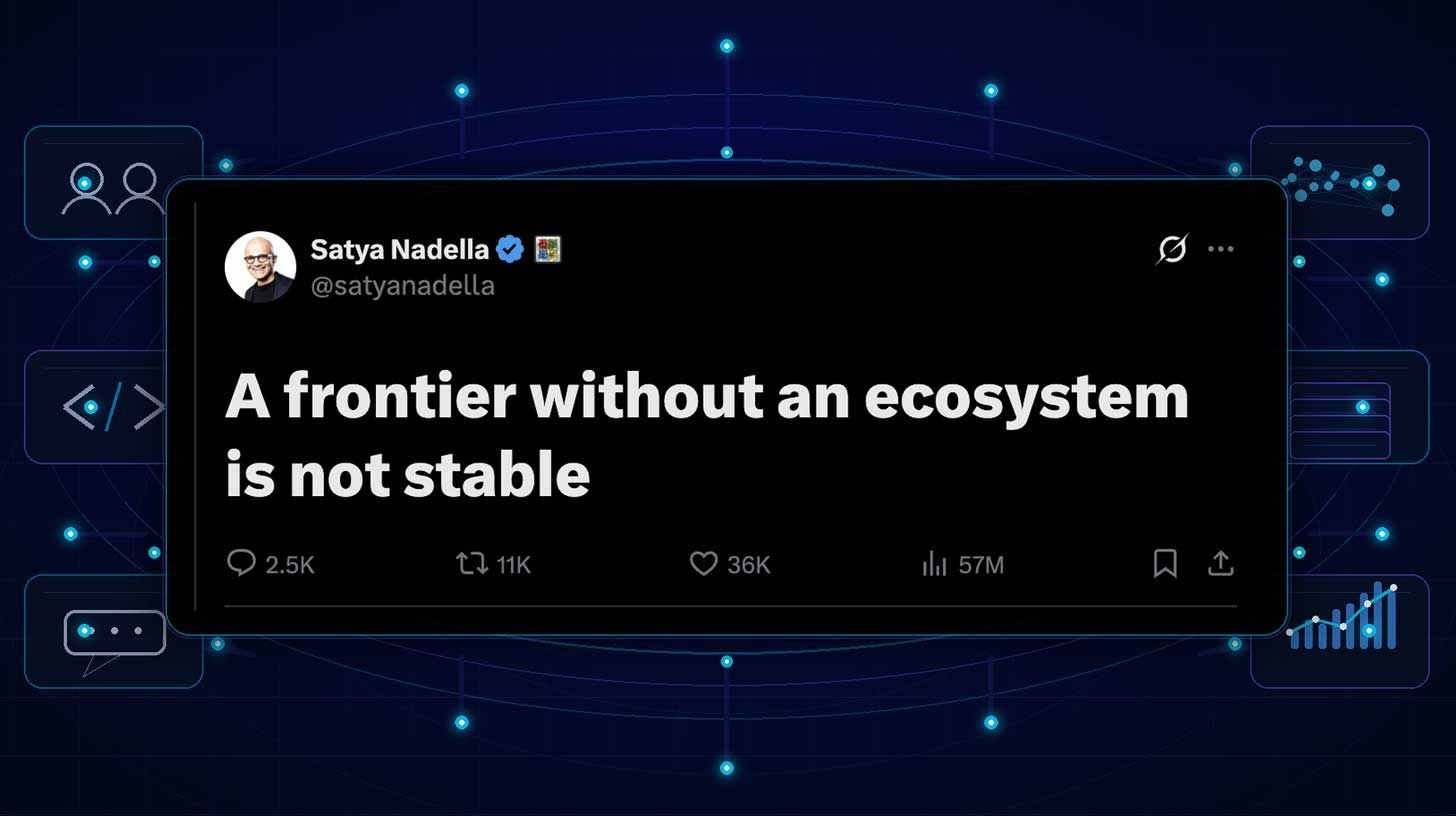
Microsoft CEO Satya Nadella argued in a new memo that a company’s real AI advantage comes from its own workflows, judgment, and institutional learning, not simply access to the best model. He warned that an AI economy dominated by a few frontier models could strip value from entire industries.
Details
Nadella framed company value as a mix of “human capital” from employees and “token capital” from AI systems the company owns rather than rents.
He urged companies to build “learning loops” that capture and improve institutional expertise over time.
His control test is simple: swap out the underlying model, and the company’s accumulated know-how should remain inside the system.
Nadella warned against a future where every sector cedes value to a handful of models that “eat everything they see.”
Why It Matters
Nadella’s argument pushes back against the frontier-lab view that superior models alone will steamroll industries. As open and cheaper models become more competitive, the durable advantage may be a company’s judgment embedded into AI systems that continuously learn from its work.
Jeff Bezos Details Prometheus and Its “Artificial General Engineer”
What’s Happening
Jeff Bezos revealed more about his AI startup Prometheus while announcing a $12B funding round at a $41B valuation. The company is building what Bezos calls an “artificial general engineer” for physical machines, while he also dismissed fears of widespread AI-driven job loss.
Details
Bezos launched Prometheus in late 2024 with Vik Bajaj, a physicist and chemist who helped create Alphabet’s life-sciences arm Verily.
Bajaj said engineers building highly complex machines like jet engines still rely on tools that have barely changed in decades.
Bezos wants to accelerate the “dream-build loop” from idea to product by 10x, noting that a 10% jet-engine thrust improvement can take a decade today.
He argued AI productivity gains will create “more than 10x” the opportunities and raise overall living standards.
Why It Matters
Bezos has rare experience scaling technically impossible businesses, and Prometheus looks like that same operating philosophy applied to invention itself. His claim that AI could create a labor shortage rather than mass unemployment is more controversial, especially in a climate already anxious about job displacement.
Meta CTO Promises Culture Reset After AI Reorg Backlash
What’s Happening
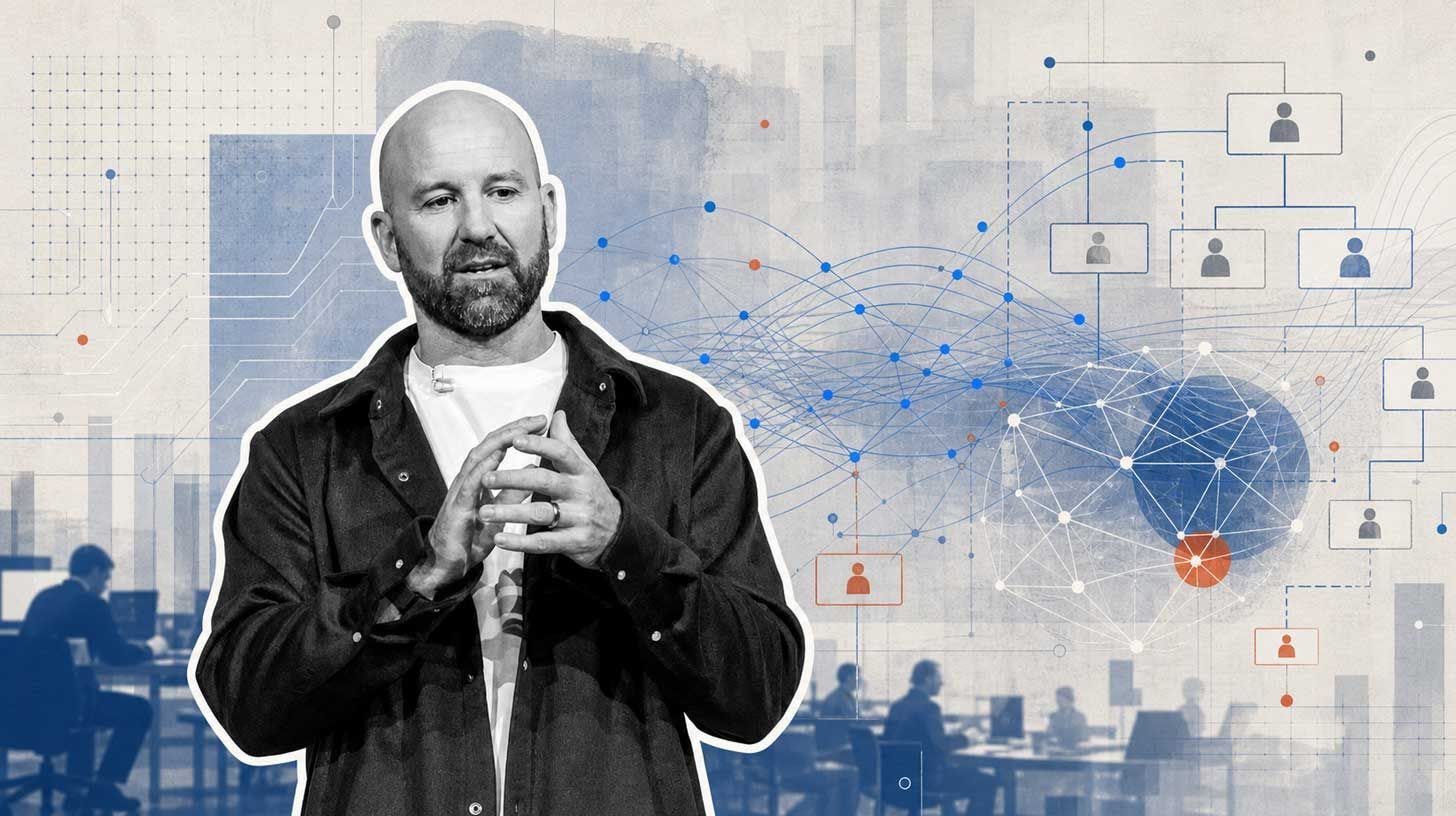
Meta CTO Andrew Bosworth pledged a culture reset in a memo published by Wired, promising manager caps, internal job mobility, and better office perks. The memo follows reports of forced Applied AI transfers, low-morale model-training work, and mounting employee frustration.
Details
Bosworth said Meta “did an atrocious job explaining the vision” behind its March AI reorg, which shifted thousands of employees into model-support work.
He acknowledged the rollout damaged trust and promised manager report caps, less internal shuffling, social events, and improved snack kitchens.
One employee reportedly called the unit “the gulag,” while anger escalated after someone hijacked a company livestream to criticize a senior AI executive.
The backlash comes alongside internal frustration over mandatory employee computer mouse tracking used to collect AI training data.
Why It Matters
Meta’s rebuilt AI lab has scored wins like Muse Spark, but the broader organization appears strained by the pace and shape of its AI transformation. Perks like microkitchens and social events may help on the margins, but they risk sounding hollow if employees feel the deeper trust issues remain unresolved.