

Welcome to this week’s edition of AImpulse, a five point summary of the most significant advancements in the world of Artificial Intelligence.
Here’s the pulse on this week’s top stories:

ByteDance’s Seedance 2.0 pushes China closer to the video frontier
ByteDance is blowing up across social feeds with Seedance 2.0, a new beta video model touting cinematic camera work, stronger temporal consistency, and synced sound. Early clips suggest it could rival or surpass the best systems currently available.
Details:
The multimodal system reportedly accepts text, image, audio, and video inputs, with testers showing range across animation, live-action, and UGC.
Native audio generation, 2K output, and ~15-second clips are supported, currently through ByteDance’s Jimeng platform.
ByteDance also previewed the Seedream 5.0 image model on select third-party apps, its response to rising competition in generative imaging.
China’s leading labs are shipping at an extraordinary pace, and Seedance looks like the next step-function jump. If quality holds, the breadth of use cases, from fight choreography to motion graphics, could widen creative disruption dramatically.

OpenAI begins in-product ads for free and Go users
OpenAI has officially started testing advertising inside ChatGPT for U.S. users on its free and $8/month Go plans. The move follows months of speculation and became fresh talking point fodder after Anthropic’s Super Bowl messaging.
Details:
Sponsored placements sit beneath responses and are targeted using the current conversation, history, memory, and prior engagement.
OpenAI stressed that ads will not influence outputs, aiming to preserve user trust for sensitive tasks.
Users can disable ads, but that reduces daily message limits, nudging heavier usage toward paid tiers; early campaigns reportedly start around $200K, with Omnicom Group among buyers.
Advertising in AI has long felt inevitable, and OpenAI is now the live experiment for how it plays out. The balance between monetization and user perception may define how comfortable people are with relying on everyday AI.
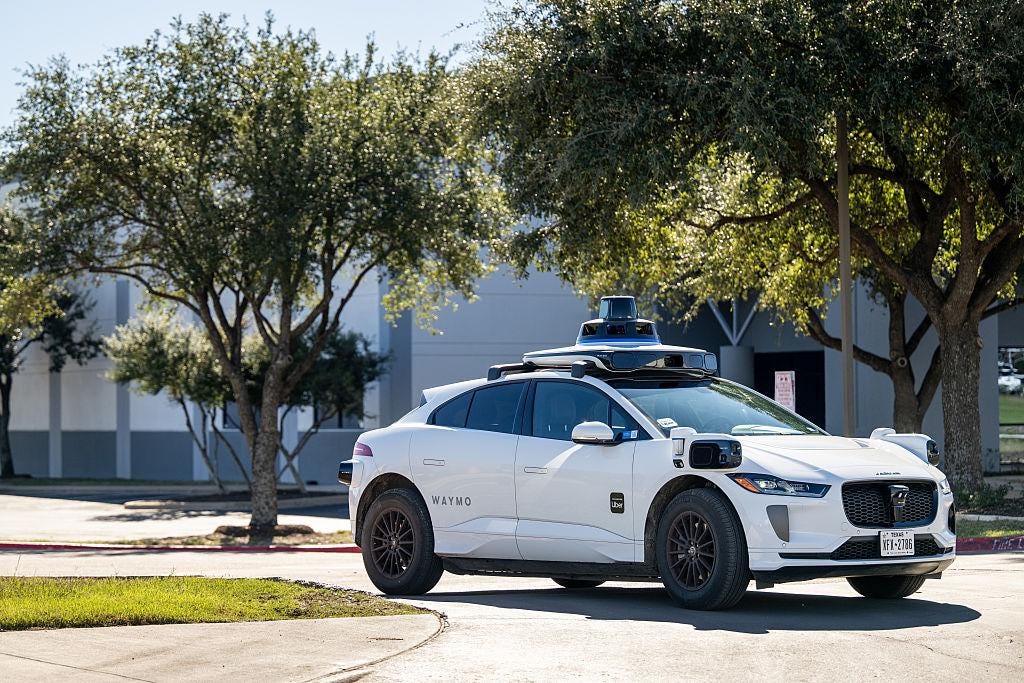
Waymo unveils a world model to train for the unknown
Waymo introduced the Waymo World Model, a simulator built on Google DeepMind’s Genie 3 that fabricates photoreal scenarios its vehicles have never met in reality. The aim is straightforward: prepare for brutal edge cases before they happen on public roads.
Details:
Genie’s visual priors are translated into paired camera and lidar streams, letting engineers test perception and planning together.
Teams can rewrite situations with prompts, driver behaviors, or map edits, from weather swings to sudden obstacles.
To overcome Genie’s short memory window, Waymo runs footage at 4× speed, extending episodes to cover longer-horizon tasks.
Street data built the foundation, but synthetic worlds can manufacture the rare moments mileage can’t. It’s a textbook application for world models and a major unlock for robotics training.
OpenAI launches GPT-5.3-Codex with self-improvement baked in
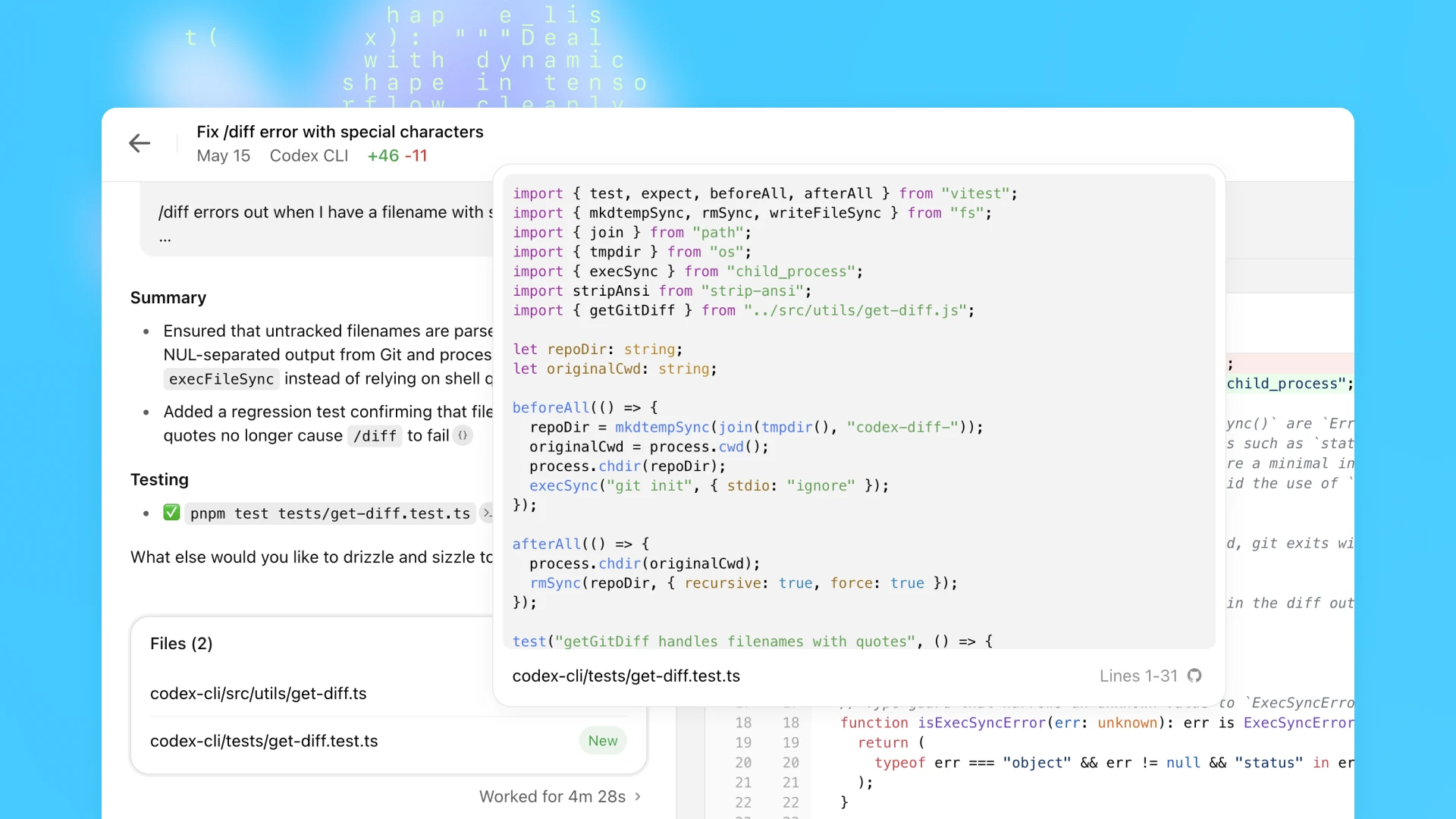
OpenAI released GPT-5.3-Codex, a new top-tier programming model combining advanced reasoning with faster performance. The system is also being used internally to debug, evaluate, and help ship OpenAI’s own work.
Details:
Early builds reportedly identified training bugs, supported rollout logistics, and analyzed eval pipelines.
It leads agentic coding tests such as SWE-Bench Pro and beats Anthropic’s Opus 4.6 by double digits on Terminal-Bench 2.0 shortly after launch.
On OSWorld, the model nearly doubled the prior Codex score, and OpenAI assigned it a “High” cybersecurity risk while pledging $10M in API credits for defensive research.
The recursive improvement narrative is accelerating, with frontier systems now contributing to their own advancement. Competitive drama aside, the real race is capability velocity.
Two more xAI founders depart amid mounting pressure
xAI co-founders Tony Wu and Jimmy Ba announced they are leaving the company. Their exits make five founding members who have stepped away, arriving just after the firm’s tie-up with SpaceX.
Details:
Wu said it was time for a “next chapter,” arguing small AI-native teams can redefine what’s possible.
He oversaw Grok’s reasoning program and reported directly to Elon Musk; no formal explanation for the move was provided.
Ba signaled 2026 will be pivotal for humanity, while reports suggest Musk has been frustrated by delays to upcoming Grok updates.
A merger, intensifying model races, reputational risks, and senior turnover is a volatile mix for any organization. Musk has navigated turbulence before, but repeated departures inevitably invite scrutiny.