

Welcome to this week’s edition of AImpulse, a five point summary of the most significant advancements in the world of Artificial Intelligence.
Here’s the pulse on this week’s top stories:

OpenAI Ships GPT Image 1.5, Closing the Gap With Google
What Happened: OpenAI has released GPT Image 1.5, a major upgrade to ChatGPT’s image generation that delivers up to 4× faster creation, dramatically better text rendering, and far stronger consistency across edits, landing as a direct response to Google’s recent creative momentum with Nano Banana Pro.
The Details:
Image 1.5 significantly improves generation speed while maintaining visual continuity across revisions, preserving faces, lighting, and composition more reliably than its predecessor.
Text rendering sees a major leap forward, with the model now handling long passages, infographics, and mixed text sizes, an area where GPT-image-1 frequently struggled.
The new release now ranks first on both Artificial Analysis and LM Arena leaderboards for text-to-image generation and image editing.
OpenAI also introduced a dedicated creative panel, complementing the chat interface with quick-start templates and curated style presets.
Why It Matters: GPT-image-1 was a viral hit, but frontier models move fast, and OpenAI had fallen behind. Image 1.5 is a long-overdue correction that delivers on benchmarks and, alongside GPT-5.2, brings OpenAI back to parity with Google’s headline-grabbing releases heading into the new year.
More AI Agents Don’t Always Mean Better Results
What’s Happening: Researchers from Google and MIT published a new study testing whether adding more AI agents improves performance, and found that results vary wildly depending on the task structure.
The Details:
The team ran 180 experiments across models from OpenAI, Google, and Anthropic, holding prompts and token budgets constant.
Financial analysis tasks that were cleanly divisible across agents improved performance by up to 81%.
By contrast, Minecraft tasks requiring sequential, step-by-step reasoning saw performance drop by as much as 70% when split across agents.
When a single agent already achieved roughly 45% accuracy, adding more agents typically made outcomes worse, with coordination overhead quickly exhausting token budgets.
Why It Matters: Agentic workflows are rapidly becoming fashionable, but this research highlights a critical caveat: more agents aren’t inherently better. For many enterprise tasks that rely on linear reasoning, a well-designed single agent may outperform complex multi-agent systems, at a fraction of the cost and complexity.
AI Models Now Pass All Three CFA Exams
What’s Happening: A new study finds that six leading AI models can now pass all three levels of the Chartered Financial Analyst (CFA) exams, with Gemini 3.0 Pro setting a record by scoring 97.6% on Level I.
The Details:
Researchers evaluated GPT-5, Gemini 3.0 Pro, Claude Opus 4.1, Grok 4, and DeepSeek-V3.1 across 980 questions covering all three exam tiers.
GPT-5 led Level II with a 94.3% score, while Gemini 3.0 Pro dominated the most challenging constructed-response section with 92%.
In 2023, GPT-3.5 failed Levels I and II, and GPT-4 passed only Level I, meaning near-perfect performance arrived in just 24 months.
A September NYU study also showed models passing all three levels, but with scores in the 70s rather than today’s near-ceiling results.
Why It Matters: Passing standardized exams isn’t the same as performing real-world financial analysis, but the speed of improvement is striking. As models master financial knowledge, the profession’s differentiation may increasingly shift toward human strengths like judgment, client trust, and relationship management.
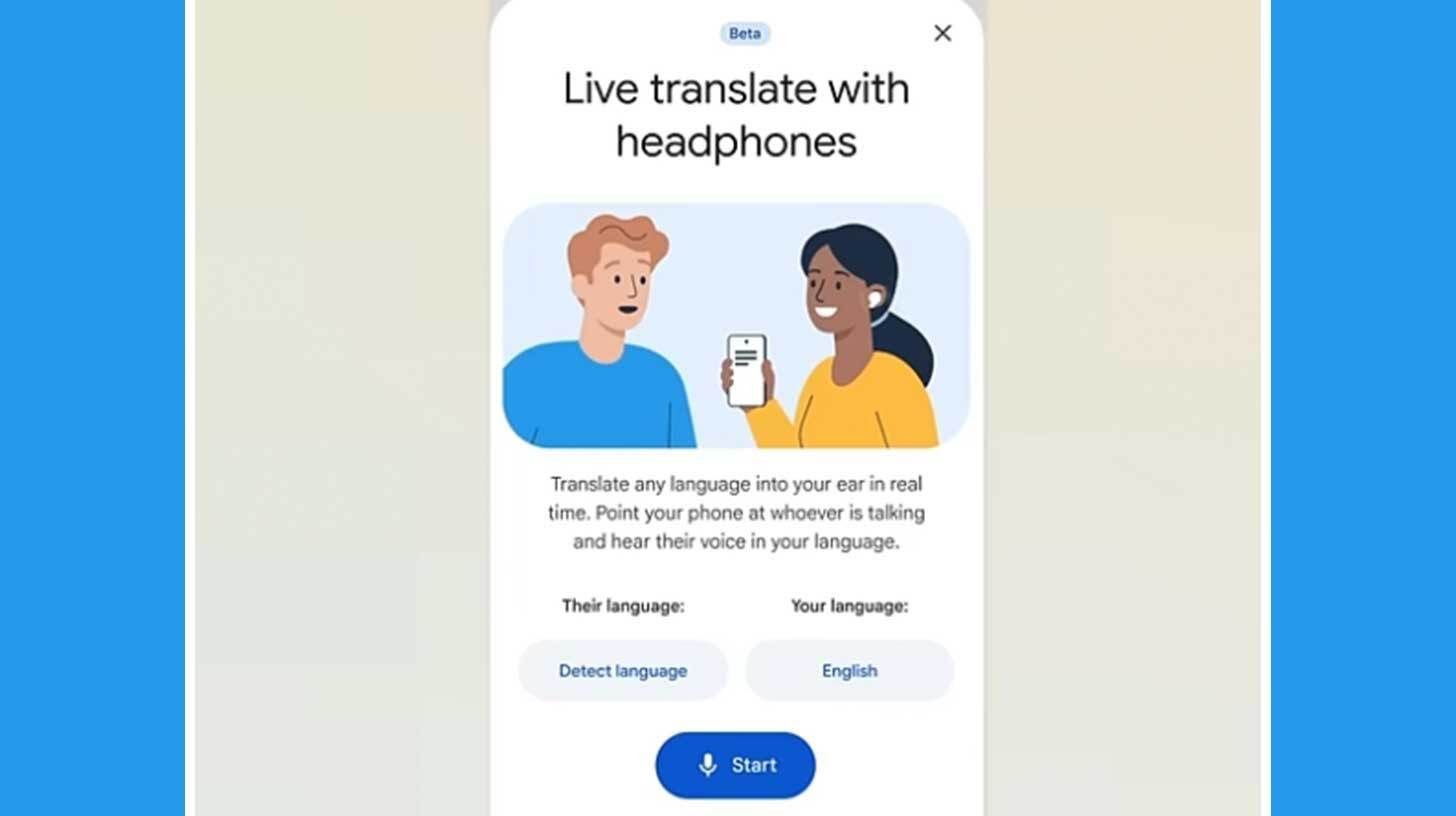
Google Brings Real-Time Translation to Any Headphones
What’s Happening: Google has rolled out new Gemini-powered translation upgrades, including a beta feature that streams live speech translations to any connected headphones, expanding a capability previously limited to Pixel Buds.
The Details:
The new Gemini 2.5 Flash Native Audio model improves conversational flow, instruction following, and real-time information handling for voice-based agents.
The Translate integration now works with any Android earbuds, supporting over 70 languages while preserving tone, pacing, and speaker cadence.
Enhanced world knowledge allows the system to better interpret slang and culturally specific phrases in context.
Google also expanded a Duolingo-style language practice mode to 20 additional countries, adding streak tracking and pronunciation feedback.
Why It Matters: Sci-fi-style universal translators are edging closer to reality. By enabling real-time translation through any headphones, and eventually across platforms like YouTube and social media, Google is pushing toward a future where language barriers fade into the background.
Microsoft Open-Sources GigaTIME for Cancer Research
What’s Happening: Microsoft has released and open-sourced GigaTIME, an AI model that can extract thousands of dollars’ worth of tumor insights from a standard $10 tissue slide, analysis that once required costly lab work and days of processing.
The Details:
The model was trained on 40 million cell samples from Providence Health, learning to link basic tissue slides with advanced immune system scans.
Researchers tested GigaTIME on data from over 14,000 cancer patients, generating a virtual library of 300,000 high-resolution tumor images across 24 cancer types.
This “virtual population” analysis uncovered more than 1,200 patterns connecting immune activity with cancer stage, treatment response, and patient survival.
Why It Matters: Cancer research is entering a phase where AI can extract high-value insights from routine data that once demanded expensive, time-intensive lab work. GigaTIME exemplifies a broader shift toward population-scale analysis that is fast, affordable, and increasingly capable of influencing real clinical decisions.