

Welcome to this week’s edition of AImpulse, a five point summary of the most significant advancements in the world of Artificial Intelligence.
Here’s the pulse on this week’s top stories:
OpenAI Launches OpenAI Health
What’s Happening
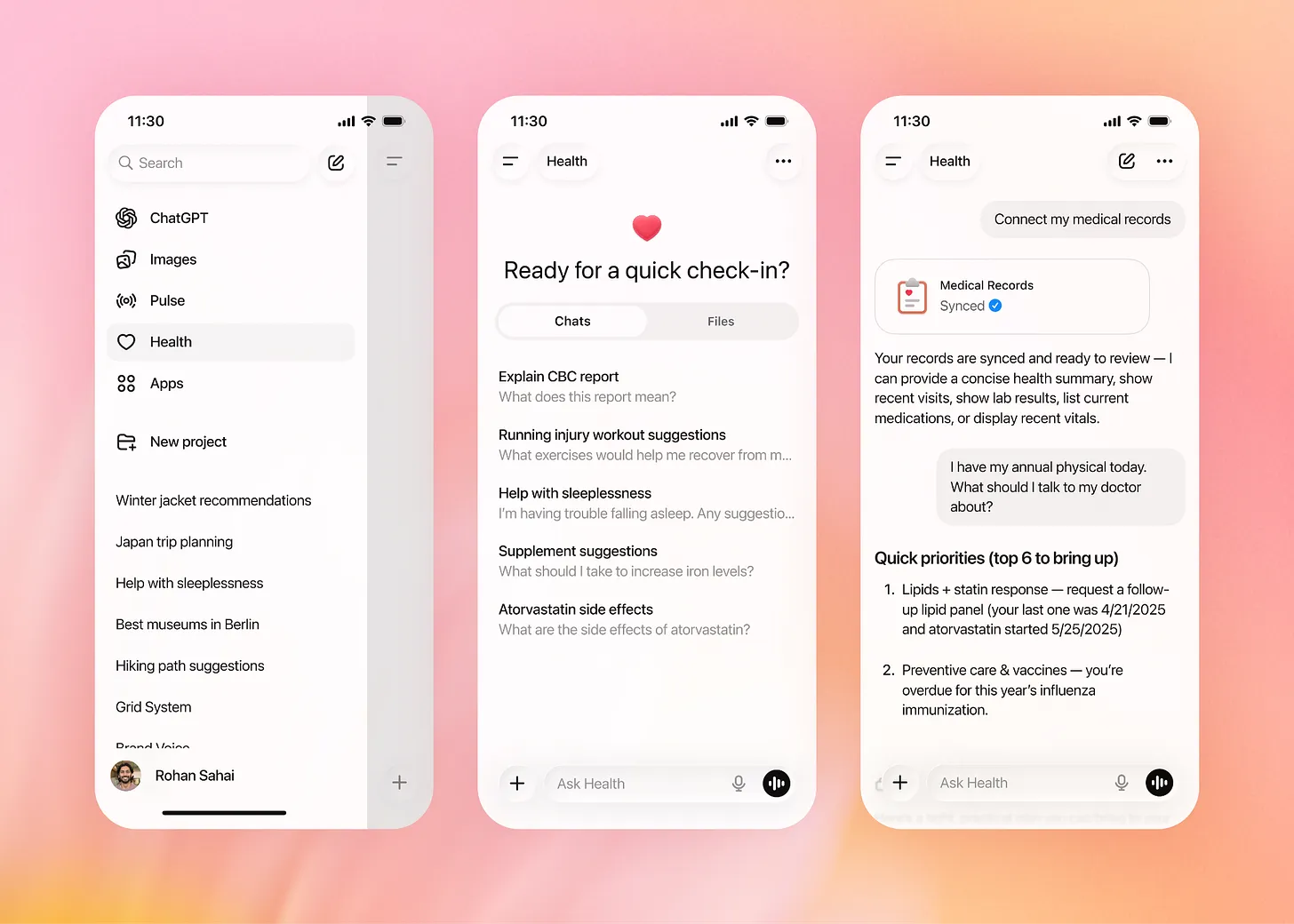
OpenAI has announced the formation of OpenAI Health, a dedicated initiative focused on applying frontier AI models to healthcare. The group will operate as a specialized division within OpenAI.
Details
OpenAI Health will focus on clinical documentation, medical reasoning, patient communication, and biomedical research support.
The initiative emphasizes HIPAA-aligned deployments and partnerships with healthcare providers and life sciences companies.
OpenAI plans to tailor foundation models for regulated healthcare environments rather than general consumer use.
Early work includes clinician-facing tools and research collaborations rather than direct-to-patient products.
Why it Matters
Healthcare remains one of the largest untapped markets for AI, but regulatory and trust barriers have slowed adoption. A dedicated OpenAI Health division signals a serious attempt to build compliant, enterprise-grade AI systems rather than repurposing consumer chatbots.
xAI Closes $20B Series E at ~$230B Valuation
What’s Happening
xAI has completed a massive $20B Series E funding round, valuing Elon Musk’s AI startup at roughly $230B. The round includes backing from Nvidia, Qatar’s sovereign wealth fund, and other major institutional investors.
Details
The valuation places xAI third among frontier AI labs, behind OpenAI (~$500B) and Anthropic (~$350B), but far ahead of most competitors.
xAI is rapidly expanding compute capacity in Memphis, with a third data center planned that would bring total power usage close to 2 gigawatts.
The company confirmed Grok 5 is currently in training.
New products are planned that tightly integrate Grok with X and xAI’s Colossus supercomputer.
Why it Matters
The AI funding race continues to accelerate, with xAI now firmly joining the rare $200B+ valuation tier alongside OpenAI and Anthropic. Musk’s control over both the AI system and a major consumer distribution platform (X), plus potential Tesla and Optimus integrations, gives Grok a structurally different path to scale.
Amazon Launches Alexa.com, Bringing Alexa+ to the Web
What’s Happening
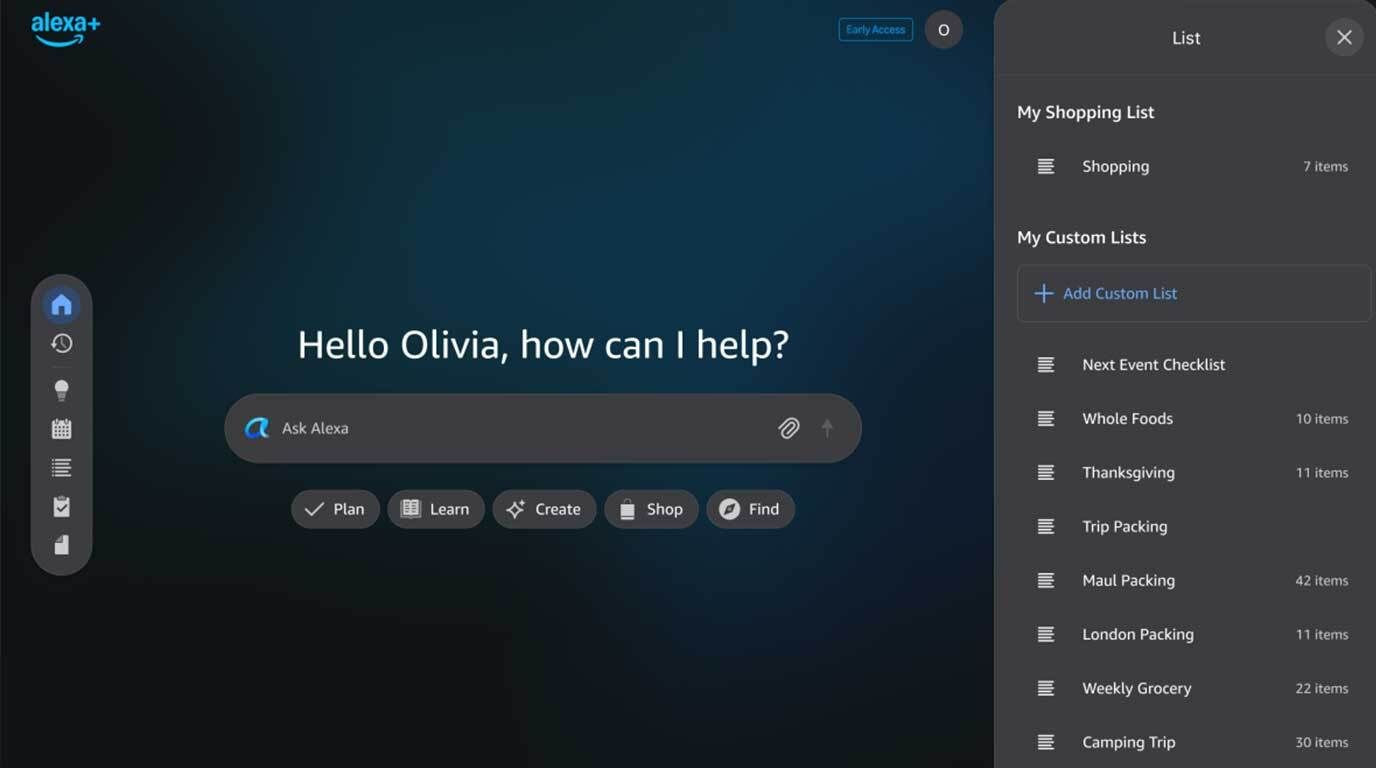
Amazon has launched Alexa.com, a browser-based interface that brings its AI-powered Alexa+ assistant beyond devices and into the chatbot arena. The move puts Alexa+ in more direct competition with ChatGPT, Gemini, Claude, and Grok.
Details
Early Access users can now use Alexa+ in any web browser for research, writing, and planning tasks.
Alexa+’s agentic capabilities are expanding through integrations with Expedia, Yelp, Angi, Square, Uber, and OpenTable.
Amazon reports engagement is up sharply, with shopping and cooking use cases seeing 3–5x higher usage.
The Alexa mobile app is being redesigned around a chatbot-first experience rather than buried voice features.
Why it Matters
Amazon’s heavy investment in Anthropic makes its parallel push with Alexa strategically complex, as it is effectively backing a competing chatbot ecosystem. Still, Alexa’s deep integration into one of the only widely adopted AI-enabled consumer devices gives Amazon a distribution advantage most rivals lack.

Nvidia Unveils Alpamayo, an Open-Source Breakthrough for Autonomous Vehicles
What’s Happening
At CES 2026, Nvidia introduced Alpamayo, a new family of open-source AI models and tools aimed at improving reasoning in autonomous vehicles. Nvidia framed the release as a major inflection point for physical AI.
Details
Alpamayo 1 is a 10B-parameter reasoning model that uses chain-of-thought logic to handle rare and complex driving scenarios.
The system outputs both driving trajectories and explicit reasoning traces explaining each decision.
Jensen Huang described it as the “ChatGPT moment for physical AI.”
Nvidia is also releasing AlpaSim, an open-source simulation framework, plus over 1,700 hours of real-world driving data.
Why it Matters
While Waymo and Tesla have demonstrated viable robotaxis, their success depends on massive proprietary R&D investments. Nvidia’s open approach dramatically lowers the barrier, enabling automakers and startups to build reasoning-based AV systems without reinventing the stack.
Yann LeCun Criticizes Meta and Reveals New AI Startup
What’s Happening
Meta’s outgoing chief AI scientist Yann LeCun publicly criticized Meta’s AI leadership and strategy in a recent Financial Times interview. He also revealed details about his new AI startup.
Details
LeCun called Alexandr Wang, now leading Meta’s Superintelligence Labs, “young” and lacking sufficient research experience.
He admitted that Llama 4 benchmarks were “fudged a little bit,” reportedly contributing to Zuckerberg’s loss of confidence in the GenAI org.
LeCun criticized Meta’s new hires as being “completely LLM-pilled,” reiterating his belief that LLMs are a dead end for superintelligence.
He announced he will serve as executive chair of his new AMI venture, with Nabla founder Alex LeBrun as CEO.
Why it Matters
The rift between Meta’s long-standing AI leadership and its new GenAI direction has been apparent since last summer’s reorganization. LeCun’s unusually blunt public comments raise the stakes, setting up a clear test of whether Meta’s new strategy proves visionary, or validates his warnings.