

Welcome to this week’s edition of AImpulse, a five point summary of the most significant advancements in the world of Artificial Intelligence.
Here’s the pulse on this week’s top stories:
Google launches Personal Intelligence for Gemini
What’s Happening
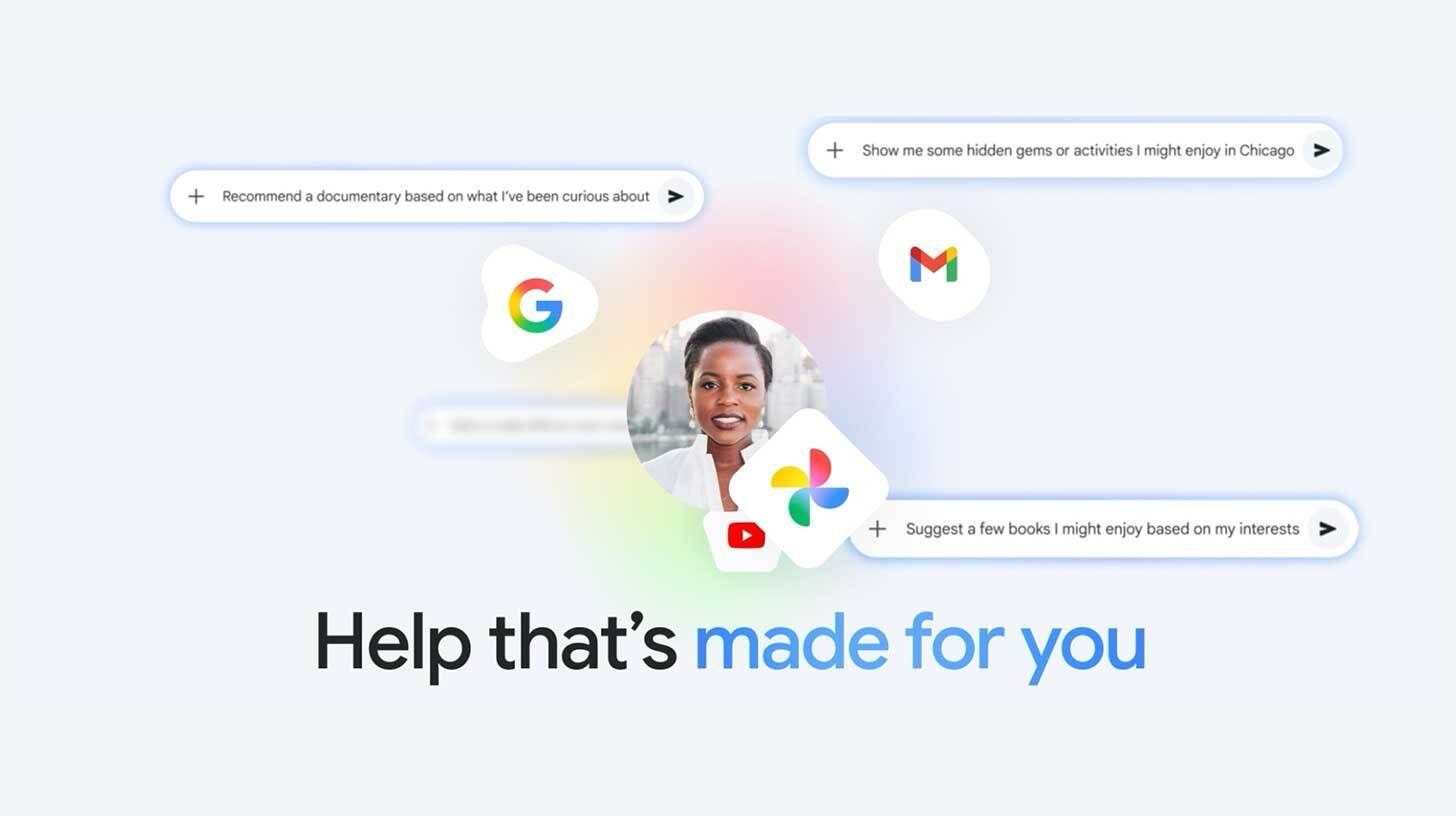
Google introduced Personal Intelligence, a new Gemini beta that lets its AI reason across Gmail, Photos, YouTube, and Search to deliver deeply personalized responses without users specifying data sources.
Details
Personal Intelligence connects Google’s app ecosystem directly to Gemini, enabling cross-app reasoning over text, images, and video.
Google VP Josh Woodward described Gemini using his emails and photos in real time to assist him at a tire shop.
The feature is opt-in and off by default; Google says personal data won’t be used to directly train its AI models.
Rolling out first to Gemini AI Pro and Ultra subscribers in the U.S., with plans to expand to free tiers later.
Why It Matters
As frontier models converge in raw capability, distribution and personal context become the real moat. Google’s control over Gmail, Photos, and YouTube gives it a structural advantage competitors will struggle to replicate.
Matthew McConaughey trademarks his voice and likeness to fight AI misuse
What’s Happening
Matthew McConaughey secured eight U.S. trademark approvals covering his voice, likeness, and video clips to protect against AI-generated deepfakes.
Details
The trademarks include audio of his “Alright, alright, alright” catchphrase and short video clips of him speaking.
McConaughey said the goal is to establish clear ownership, consent, and attribution norms in an AI-driven media landscape.
His legal team says trademarks allow federal enforcement, avoiding weaker state-by-state publicity laws.
He is also an investor in ElevenLabs and the face of Salesforce’s Agentforce campaigns.
Why It Matters
AI image and video models are eroding the boundary between real and synthetic media. While enforcement remains difficult, this signals a growing push by high-profile figures to establish clearer IP defenses in the AI era.
Microsoft unveils “Community-First AI Infrastructure” plan
What’s Happening
Microsoft announced a new framework aimed at reducing the local economic and environmental backlash from AI data center expansion.
Details
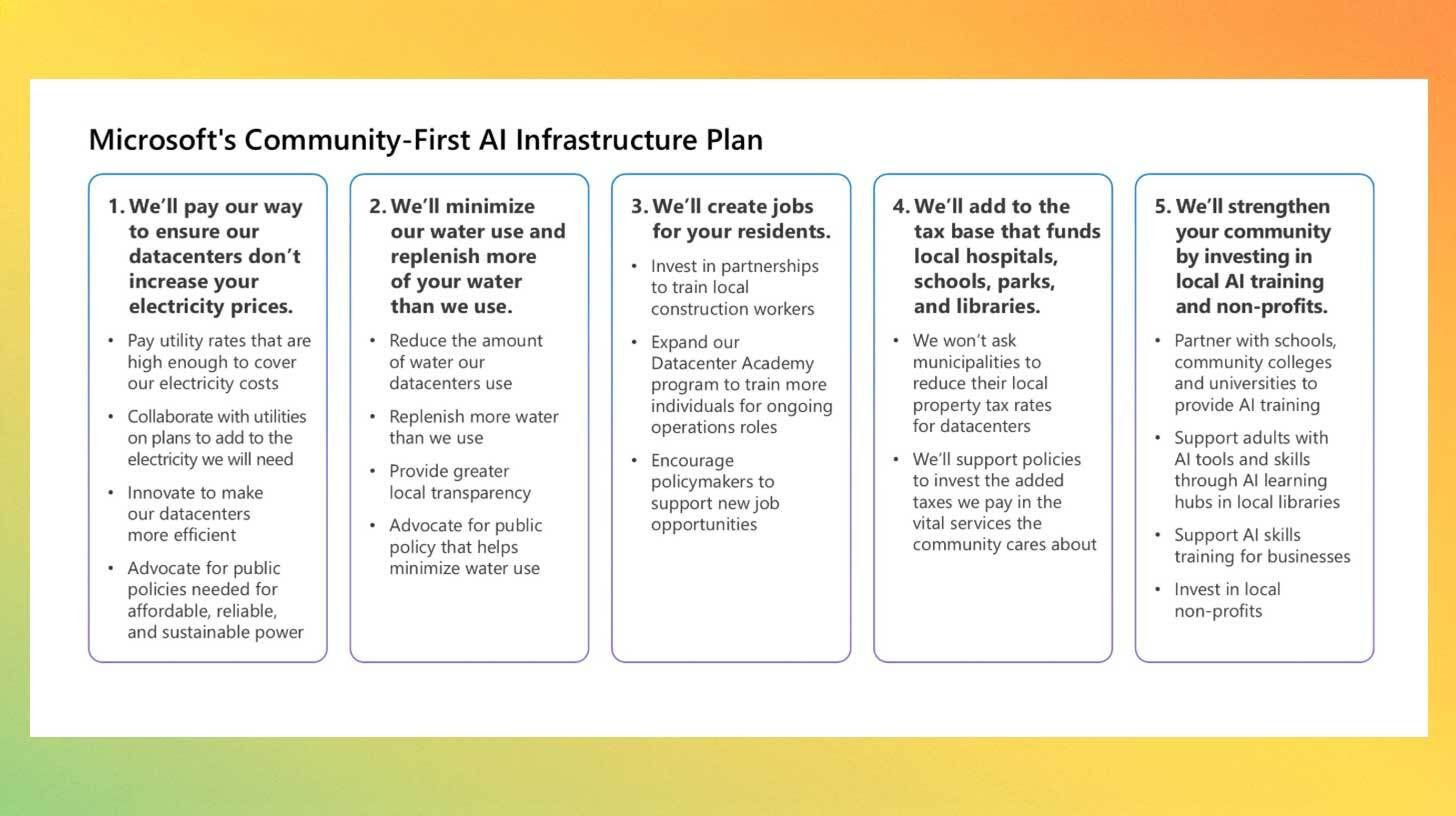
Microsoft says it will ensure utilities charge rates that fully cover data center power usage, preventing residential bill increases.
The company committed to cutting water-use intensity by 40% by 2030, using closed-loop cooling systems.
It pledged to pay full property taxes without abatements and to fund job training for nearby communities.
The move follows political pressure, including criticism that tech firms should “pay their own way” on energy.
Why It Matters
AI infrastructure is scaling faster than public acceptance. Microsoft’s plan addresses real concerns, but reversing growing community resistance will likely require sustained proof, not just promises.
Apple officially partners with Google to power Siri with Gemini
What’s Happening
Apple and Google confirmed a multi-year partnership to use Gemini for Apple’s foundational AI models and its long-awaited Siri overhaul.
Details
Apple said Gemini offers the “most capable foundation” for its AI roadmap.
Reports indicate Apple may be paying roughly $1B annually to license Google’s technology.
Apple confirmed its ChatGPT partnership remains active and that AI features will still run on-device and via Private Cloud Compute.
The announcement briefly pushed Google’s market cap above $4T.
Why It Matters
Apple is officially outsourcing Siri’s AI brain to a key rival, validating Google’s rapid Gemini progress. It also creates an awkward dynamic with OpenAI, whose biggest competitor is now powering Siri’s core intelligence.
Anthropic launches Cowork, bringing Claude’s agents to macOS
What’s Happening
Anthropic released Cowork, a macOS tool that extends Claude’s agentic capabilities beyond coding into everyday work.
Details
Cowork operates inside a designated Mac folder, where Claude can autonomously organize files, generate documents, and modify content.
Built-in integrations include Asana and Notion, with optional browser control via Chrome.
Users can assign multiple tasks asynchronously, treating Claude more like a colleague than a chatbot.
Launching in research preview for Max-tier users, macOS-only for now.
Why It Matters
Claude Code proved that users want agentic AI beyond chat. Cowork lowers the intimidation barrier for non-developers, pushing AI closer to becoming a true digital coworker rather than a reactive tool.